
Don’t be so scared of AI - it can’t replace your bodega guy
A personal reflection on AI anxiety, what gets lost when tools accelerate, and why human connection still anchors the way we learn.
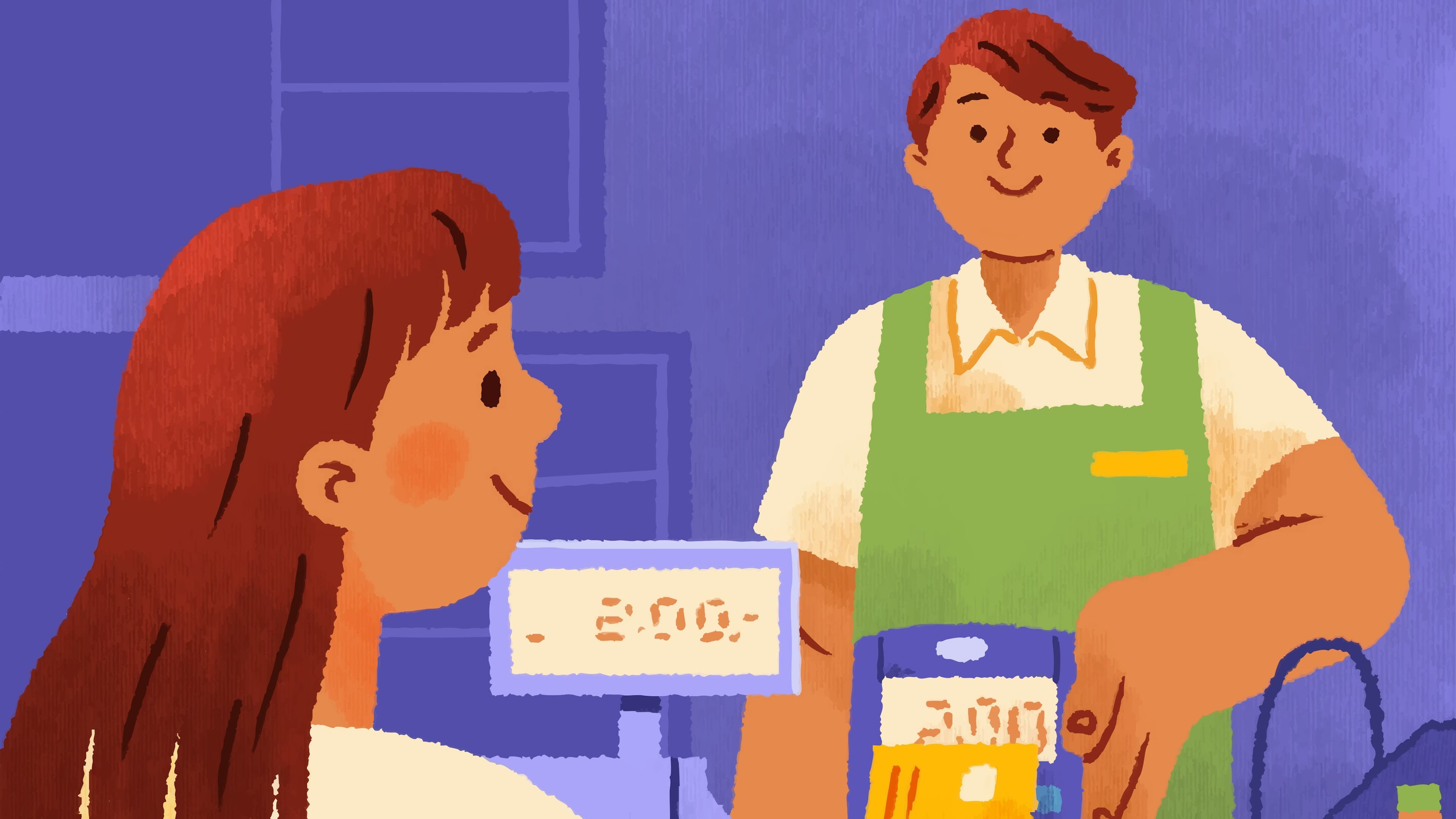
I’ve been spending a lot of time these days offsetting my AI anxiety with the most human things I can think of. For example right now, I’m writing this (the old-fashioned way). I’ve also been listening to my favorite saddest songs, reading old books, watching movies that tear me apart, and having conversations with my bodega guy.
These are the things that comfort me because these moments are irreplaceable and they are so, so human.
I recently cried because I was using Claude Cowork and realized that my entire senior thesis from college could be done in 10 minutes. I didn’t know why I was crying at first. Was it an ego thing? Did I feel like my work was obsolete? Useless? A waste of time? Or was it about how quickly things were changing before my eyes? I cried for the current students taking my favorite text mining class who never have to (and probably don’t care to) learn the nuts and bolts of how to do the work from scratch. I cried for my thesis advisor (Matt) who has to struggle to teach that class in a meaningful way. Is he even still teaching it? How does it work now?
Wrapping my brain around this devastating realization and asking myself all of these questions prompted me to actually reach out to Matt over email and ask him directly. His response was both melancholic and optimistic. I was relieved to hear that he is still teaching the class, but saddened to hear that it would be unrecognizable to me. The once projects-based class is now project-less and is evaluated with paper exams. And he tells me, frustratingly, why he’s in a bit of a bind with AI:
It's just so hard to discern the right level of assignments that can use AI. If the expectations are the same as they ever were, you're right, it can be done in 10 minutes, maybe with limited understanding of the process. But if you set the bar at what it would now take days or weeks to accomplish, then the conceptual bar is so impossibly high that a lot of students will be working on things that they'd be really stretched to understand.
In other words, one assignment when I was in the class was to write Python blocks in a Jupyter notebook to tokenize Moby Dick and run a topic model on it. This was challenging to do from scratch and required me to learn five different packages and syntaxes, making the 1 week deadline for this project extremely reasonable, if not tight.
This is child’s play for AI.
An LLM could do this for me with one prompt, and it could do it better than I ever could have in my silly little notebook. So what would be the equivalent level of difficulty for a student today who has access to LLMs and all they are capable of? I decided to ask Claude to see how convoluted it would need to be:
This “assignment” it has come up with is systems building, workflow chaining, prompt tuning. These of course are things that I have learned from joining the workforce but are far from the technical skills I got to enjoy refining in college. I don’t know yet if this is a good or bad thing. It’s possible that it is just different, and that is always uncomfortable at first.
In the optimistic part of his message, Matt reminds me of this fact of life:
There was a time when CS was basically electrical engineering, because you had to know how to route bits to specific hardware registers. We don't usually teach it that way anymore, so students now often don't understand much of the hardware-level details of programming… On the other hand, they can also get radically more done without needing to manage those details. AI will be similar, but we really don't know where the balance should be yet.
I’m sure that even my version of the class similarly devastated alumni who had taken CS classes when they more closely resembled electrical engineering. Maybe they also felt the same sadness for the loss of learning the physical work.
We can all see and have heard a million times that AI is going to fundamentally change the world. Yes, it will replace some jobs. Yes, it will alter how we share, retrieve, and interact with information. And hearing those blanket statements can be terrifying. And experiencing that change in a very personal way can be even more terrifying, like how this realization about my thesis terrified me. But it can be a relief to remember that it is not the first time things have changed and we’ve had to adapt.
I have to confess that the title of this piece is slightly misleading… The closest bodega to me is actually a grocery store and the cashier is a woman (bodega guy just sounded really good with AI). But you get the point. When you are feeling scared like I do sometimes, be a local, talk to your familiar faces, your not-so-strangers. Remind yourself it is in our nature to connect with each other. And AI can’t replace that.